A Guide to the Main types of conveyor belt
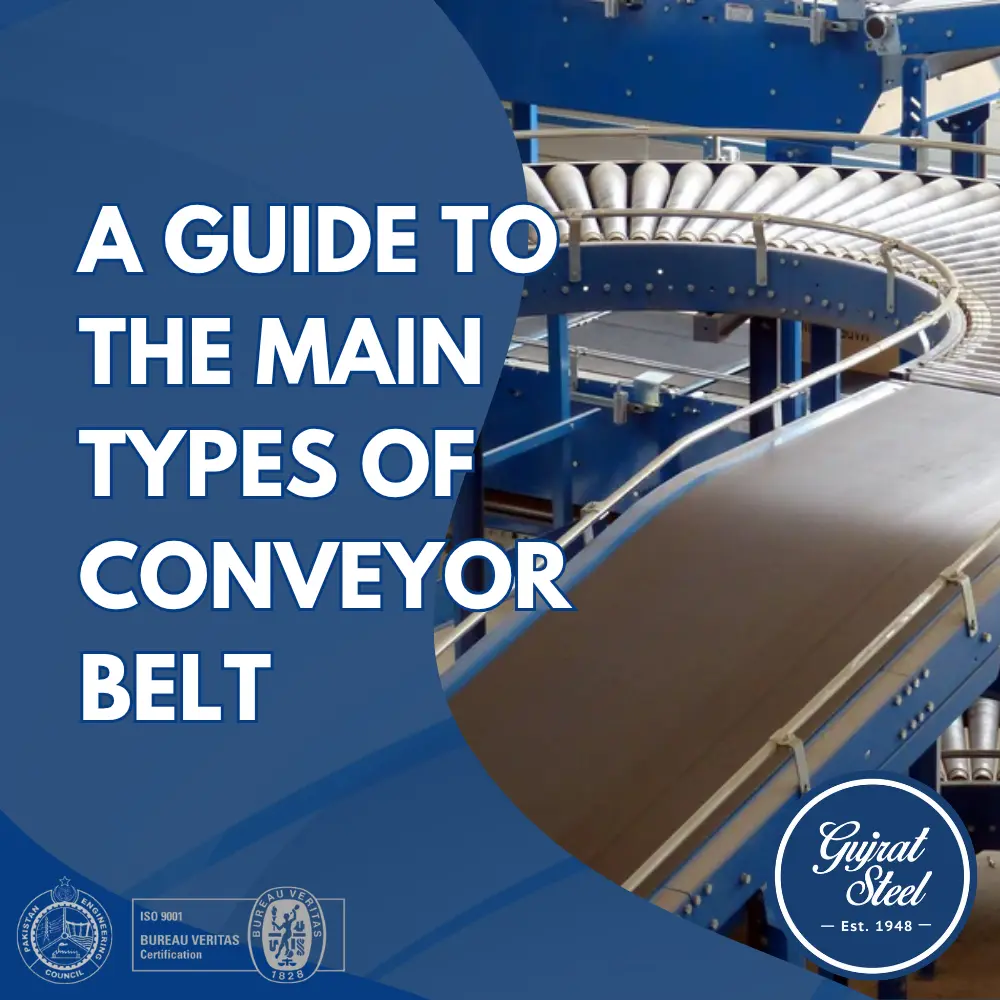
The different types of conveyor belt are specialized systems designed to transport goods and materials with efficiency. From simple flat belts for boxes to robust steel belts for hot items, each is engineered for a specific industrial application. Understanding the various types of conveyor belt is key to automating and optimizing your workflow.
Key Takeaways
- The selection of a conveyor belt is determined by the product’s size, weight, and properties, as well as the operational environment.
- General-purpose belts like flat and modular belts are versatile solutions for assembly lines and packaging.
- Specialized belts, such as cleated or incline belts, are necessary for moving materials at an angle without spillage.
- The belt’s material (rubber, PVC, metal, fabric) is crucial for its durability, flexibility, and suitability for the application.
- Choosing the correct conveyor system is a critical investment in your company’s productivity and operational efficiency.
Table of Contents
How the Right Conveyor Belt Can Revolutionize Your Operations
At Gujrat Steel, we have built our reputation on providing the strong, reliable backbone for industrial operations through our steel products. We understand that efficiency in a warehouse or factory is a result of a perfectly integrated system. While our warehouse racking systems optimize storage, conveyor belts optimize movement.
Choosing the correct equipment is paramount, and this is especially true when selecting from the many types of conveyor belt. This single decision impacts your workflow speed, product handling, and overall productivity. It’s the difference between a seamless operation and a system plagued by bottlenecks.
In this guide, we will explore the diverse world of conveyor belts. We’ll help you understand the core designs, their specific applications, and how to choose the one that will best serve your business. Let’s move your operations forward.
The Foundation: Understanding General-Purpose Conveyor Belts
Before diving into specialized models, it’s essential to understand the most common types of conveyor belt that form the basis of most material handling systems. These are the versatile workhorses found in countless warehouses, assembly plants, and distribution centers.
Flat Conveyor Belts
This is the most recognizable and widely used type of conveyor. It consists of a continuous loop of flat, flexible material that rotates over a series of rollers or a metal slider bed. It is the go-to choice for transporting individual items with regular shapes, such as boxes, totes, and cartons.
Flat belts are the heart of assembly lines, inspection stations, and packing departments. Their simple design makes them reliable and cost-effective. The surface can be made from various materials to provide different levels of grip, making them adaptable to many internal conveyance needs.
Modular Conveyor Belts
Modular belts are a significant step up in terms of durability and flexibility. They are not a single continuous loop but are constructed from countless interlocked segments of hard plastic. This design offers several key advantages.
First, they are incredibly robust and resistant to wear and tear. Second, if a section gets damaged, you only need to replace the affected modules, not the entire belt, making maintenance simpler and more affordable. Finally, their design allows them to travel around corners and bends, offering more flexibility in your warehouse racking layout.
Specialized types of conveyor belt for Challenging Tasks
While general-purpose belts handle the basics, many industrial processes require a more specialized solution. The following types of conveyor belt are engineered to solve specific material handling challenges, from moving items uphill to handling delicate or uniquely shaped products.
Cleated Conveyor Belts
Imagine trying to move loose materials like gravel, grain, or small parts up a steep slope. On a flat belt, gravity would win, and your product would slide right back down. This is where cleated belts come in.
These belts feature vertical barriers or “cleats” at regular intervals along the surface. These cleats act like pockets, holding the material in place as it moves up an incline or down a decline. This simple but effective design is essential in agriculture, construction, and recycling industries.
Incline and Decline Belts
Similar to cleated belts, incline and decline belts are designed for elevation changes. However, instead of large cleats, they often feature a rough, high-friction surface texture. This provides the necessary grip to move items like cardboard boxes or luggage up or down a slope without slippage.
These are vital components in multi-level facilities, allowing for a smooth flow of goods between floors. Optimizing vertical space is key to warehouse optimization, and these belts make it possible to integrate different levels seamlessly.
Conveyor Belts Designed for Demanding Environments
Some industries require conveyor belts that can withstand extreme conditions or meet stringent standards. These heavy-duty and specialized types of conveyor belt are built from materials designed for heat, chemicals, or hygienic requirements.
Wire Mesh and Steel Belts
When you need to handle extreme temperatures, a standard rubber or plastic belt simply won’t do. Wire mesh belts, often made of stainless steel, are the perfect solution. They can transport products through ovens for baking or cooking, or through freezers for flash-freezing.
The open, mesh design also allows for airflow, which is ideal for drying or cooling processes. For even heavier-duty applications, solid steel belts offer incredible strength and heat resistance. Understanding the properties of different metals, like in our stainless steel vs. carbon steel comparison, is key to appreciating their value in these tough environments.
Sanitary and Washdown Belts
In the food processing, beverage, and pharmaceutical industries, hygiene is non-negotiable. Sanitary and washdown belts are designed to meet these strict requirements. They are made from materials that inhibit bacteria growth and are incredibly easy to clean and sanitize.
These belts often feature sealed edges and a smooth, non-porous surface. The entire conveyor system, including the frame and motors, is typically constructed from stainless steel to prevent rust and corrosion, a topic we cover in our guide on how to prevent rust.
Filter Belts
Filter belts serve a unique dual purpose. They transport material while simultaneously allowing liquids to drain away. The belt itself is a porous mesh or screen.
This type is commonly used in wastewater treatment plants to separate solids from liquids or in food processing for dewatering washed vegetables. It’s a perfect example of how different types of conveyor belt can be integrated directly into a production process, not just for transportation.
How to Select the Right Type of Conveyor Belt
Choosing the perfect conveyor system requires a careful analysis of your specific needs. Selecting the wrong one can lead to product damage, system downtime, and lost efficiency. Here’s a simple framework to guide your decision.
First, analyze your product. What are its dimensions, weight, and characteristics? Is it fragile, abrasive, or a bulk material? This will narrow down the required belt material and surface.
Second, consider your process. Do you need to move items up an incline, around a corner, or through an oven? The function will dictate the necessary design, whether it’s cleated, curved, or wire mesh.
Finally, evaluate your environment. Is it a cleanroom, a foundry, or an outdoor facility? The operating conditions will determine the durability and material requirements for all components of the system. By considering these factors, you can confidently select from the many types of conveyor belt available.
Conclusion
The world of material handling is powered by the steady movement of conveyor belts. Understanding the fundamental types of conveyor belt and their specific applications is crucial for designing an efficient and productive operation. From simple flat belts to complex, specialized systems, the right choice will serve as a vital artery in your facility, ensuring a smooth and continuous workflow.